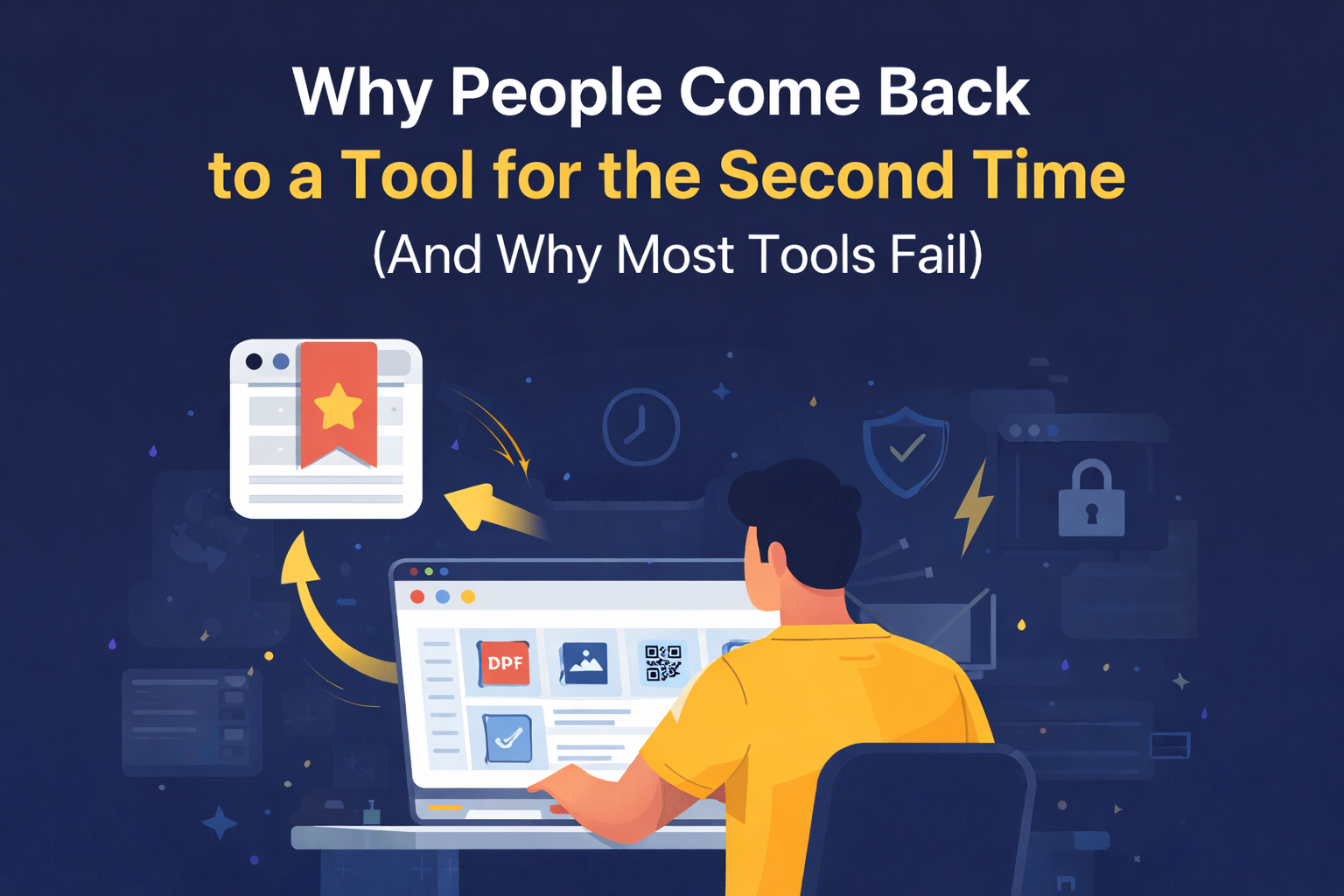
Why People Come Back to a Tool for the Second Time (And Why Most Tools Fail at It)
Most tools get used once.
Very few get bookmarked.
And almost none become a “go-to” tool.
That second visit — when someone types your URL directly instead of Googling alternatives —
that’s when you know you built something right.
So what makes someone come back to a tool?
After building AllInOneTools and watching how people use free utilities, I’ve realized:
It’s not features.
It’s not design.
It’s not even price.
It’s something deeper.
The First Visit Is About Curiosity , The Second Visit Is About Trust
The first time someone lands on a tool, they’re testing you.
They’re asking silently:
Is this safe?
Is this fast?
Is this full of ads?
Is it going to force login?
Is this another “upload → pay → unlock” trap?
That’s why I wrote about:
The first visit is about reducing friction.
But the second visit?
That’s about experience.
Why Most Tools Fail at Retention
Most free tools fail for simple reasons:
They work… but feel sketchy.
They work… but are slow.
They work… but push signup.
They work… but show too many ads.
They work… but don’t feel stable.
They focus on getting traffic.
Not on earning return visits.
That’s the difference.
What Actually Makes Someone Come Back
From my experience building AllInOneTools, return behavior happens when:
1️⃣ The tool is fast
No waiting. No spinning loader forever.
2️⃣ It feels safe
No file uploads if not necessary.
No hidden tracking.
3️⃣ It respects time
Open → Do → Close.
4️⃣ It works consistently
No random errors.
No “server busy” messages.
5️⃣ It doesn’t trap the user
No account walls.
No artificial limits.
No aggressive popups.
People come back to tools that feel calm.
Familiarity Is Powerful
When someone uses a tool twice, something changes.
It becomes:
“My PDF compressor.”
“My image resizer.”
“My quick SEO checker.”
Ownership begins.
And once that mental switch happens, competitors don’t matter as much.
Instead, I built one place where everything feels consistent.
Same layout.
Same philosophy.
Same experience.
That consistency builds memory.
Memory builds return visits.
Returning Users Don’t Happen by Accident
Retention isn’t magic.
It’s the result of decisions like:
No login by default
Local browser processing
Clean interface
No over-engineered dashboards
Focused, single-purpose tools
You don’t “force” users to come back.
You remove reasons for them to leave forever.
The Real Metric That Matters
Views are nice.
Traffic spikes are exciting.
But the real metric?
When someone types your domain directly into the browser.
That’s not SEO.
That’s trust.
That’s product-market alignment.
That’s when a tool becomes part of someone’s workflow.
Final Thought
The first visit tests your promise.
The second visit proves your value.
And the third visit?
That’s when you stop being a website…
and start becoming a habit.
That’s the kind of product I’m trying to build with AllInOneTools.
About the author
- Founder of AllInOneTools.net — building simple, free, no-login web tools that solve everyday problems. I focus on practical tools, SEO, productivity, and shipping useful software in public. Writing from real experience while building and growing AllInOneTools.
Comments
Join the discussionNo comments yet. Be the first to comment.


